
Water dripping from the bottom of a tankless heater is a sign something is wrong, but it is not always the heat exchanger. Loose fittings, a failed valve, a blocked condensate line and scale damage can all put water on the floor. The cause decides whether it is a small repair or a replacement.
Start by shutting off water and power to the unit. Turn off the gas at the shutoff valve. Then dry the area and watch where the drip begins. That detail tells a plumber most of what they need to know before arriving.
Where the water comes from
The bottom of a tankless unit holds the water connections, the gas inlet and, on condensing models, the condensate drain. Water at the bottom may come from any of those. The first job is to separate plumbing leaks from internal leaks.
| Source | What it suggests | Typical remedy |
|---|---|---|
| Hot or cold water fitting | Loose union or worn washer | Tighten or replace |
| Service valve | Worn seal or corrosion | Replace the valve |
| Pressure relief valve | High pressure or a failed valve | Check pressure, replace the valve |
| Condensate drain or trap | Clogged line or cracked trap | Clear or replace |
| Inside the cabinet | Cracked heat exchanger or internal fitting | Often replacement |
| Condensation on the case | Cold incoming water and humid air | Usually harmless |
A condensing model creates condensate while it runs. If the drain line is blocked or the neutralizer is full, water backs up and drips from the unit. That is a simple fix, and a plumber can clear the line and test the flow.
Scale and the heat exchanger
The heat exchanger is a narrow metal passage where water is heated. Scale narrows it over time, which raises temperatures and stresses the metal. A cracked exchanger leaks inside the cabinet, and the water appears at the bottom.
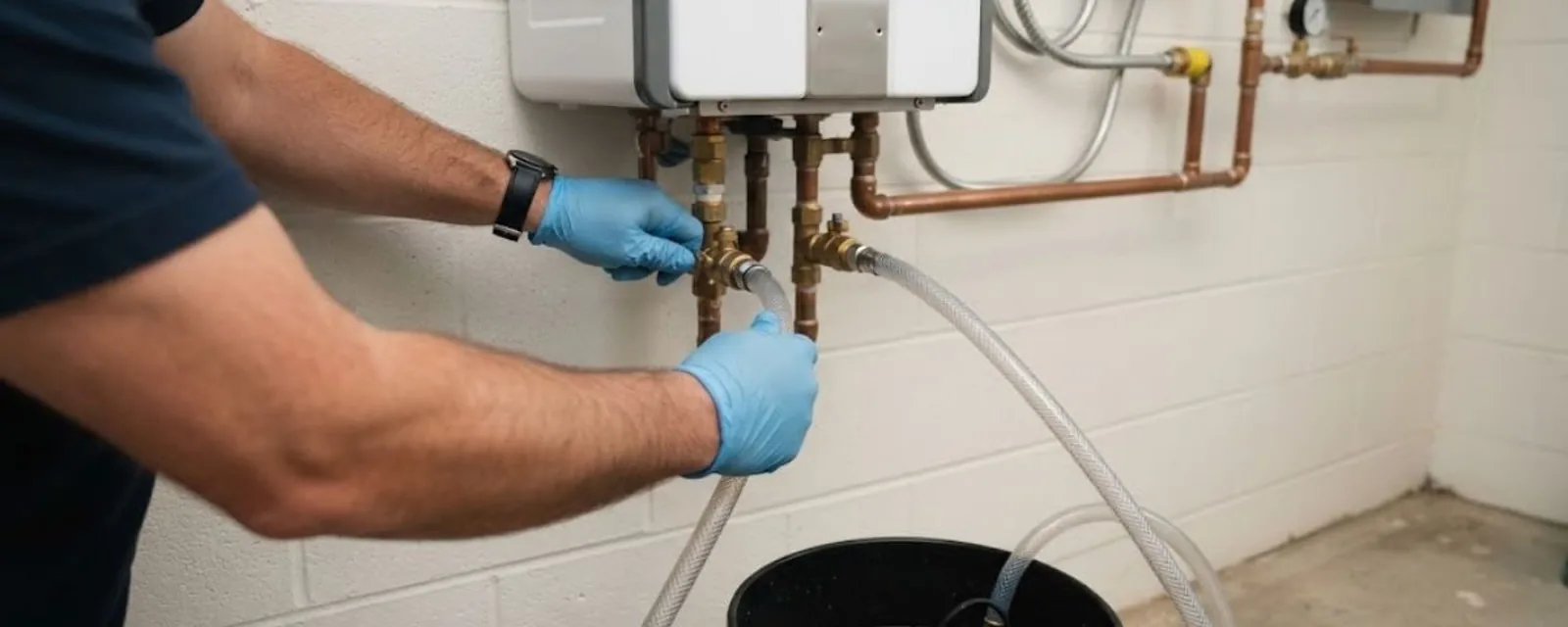
Flushing the unit with vinegar or a descaling solution through the service valves removes scale. Most manufacturers recommend doing it regularly in hard water. If the exchanger has already cracked, flushing cannot repair it.
What to do right away
- Turn off the gas, power and cold water supply to the heater.
- Place a bucket or towels under the leak and keep the area dry.
- Note where the water first appears and whether it drips or runs.
- Check the model label for the age of the unit and any warranty information.
- Call a plumber with those details.
What a plumber checks on arrival
The plumber starts by drying the unit and watching where the water appears. Then they check the water connections, the service valves, the relief valve and the condensate line. A moisture meter helps confirm whether water is inside the cabinet.
Next they look at the error history on the display, the water pressure and the age of the unit. Pressure that is too high can open the relief valve and drip water from the discharge pipe, which looks like a leak from the unit.
If the heat exchanger is cracked, the plumber explains the options. A written price for repair and replacement lets you decide with the full picture, including the warranty on each.
Yorba Linda: hard water is the main driver
Yorba Linda Water District's 2024 data shows groundwater hardness averaging 20 grains per gallon, with a range of 16 to 25, and imported supply around 16. The U.S. Geological Survey classifies water above 180 milligrams per liter as very hard, and the district's groundwater average of 347 milligrams per liter is well above that line.
That is a practical risk for a tankless heater. Scale forms on the heat exchanger faster in water this hard, so flushing on a schedule and installing a softener upstream are worth considering. Golden State Water Company's Placentia and Yorba Linda system reported about 11 grains per gallon on average in 2025, still in the hard range. Check your own bill to see who supplies you.
Sources: Yorba Linda Water District 2024 water quality data, Golden State Water Company 2025 water quality report, USGS hardness scale.
Repair or replace
A loose fitting, a worn valve or a blocked condensate line is a repair. A cracked heat exchanger usually means replacement. Compare the repair cost with the age of the unit and the warranty. If the unit is past ten years, it may be better to replace it.
Ask for a written price for each option. Our tankless water heater service covers flushing, repair and replacement, and our plumbers can diagnose the leak in one visit.
Keeping the next leak from happening
Maintenance habits
- Flush the heat exchanger on the schedule in the manufacturer's manual.
- Keep the area around the heater clear so leaks are easy to spot.
- Check the condensate line and neutralizer each time you flush.
- Install a softener or scale inhibitor if your water is very hard.
- Test the pressure relief valve once a year as the manual directs.
A small leak that is ignored can damage the cabinet, the wall and the floor. If you see water, act the same day. If the water is coming from the wall behind the unit, call leak detection for a non-invasive search.
Customers in Placentia call us for the same issue. See our Placentia page for how we cover that area.
Frequently asked questions
Common causes are a loose water fitting, a worn service valve, a clogged condensate line or a cracked heat exchanger. A plumber can tell which by looking at where the water starts.
Water near electrical and gas parts is a hazard. Turn off the gas, power and water to the unit and call a plumber.
Yes. Scale builds on the heat exchanger, stresses the metal and can crack it. Yorba Linda Water District reports groundwater hardness averaging about 20 grains per gallon.
Usually not. It is normally replaced, and the unit's age and warranty decide whether to replace the exchanger or the whole heater.
Follow the manufacturer's manual. In hard water, flushing is typically done more often, and service valves make it easy.
For flushing, repair or replacement, see tankless water heater service.
If the leak seems to come from the wall, leak detection can find the source.
For code questions, plumbing work in Yorba Linda follows the California Plumbing Code, which incorporates the Uniform Plumbing Code (UPC), and the city adopts it in Municipal Code 15.24.
Our home base and main service area is Yorba Linda, described on the Yorba Linda Pro Plumbing home page.