
Yorba Linda's water is hard, and the numbers are public. Yorba Linda Water District's 2024 report lists its groundwater at an average of 20 grains per gallon, with a range of 16 to 25. Call (714) 750-8637 to talk about a softener or a filter sized to your home and your supplier.
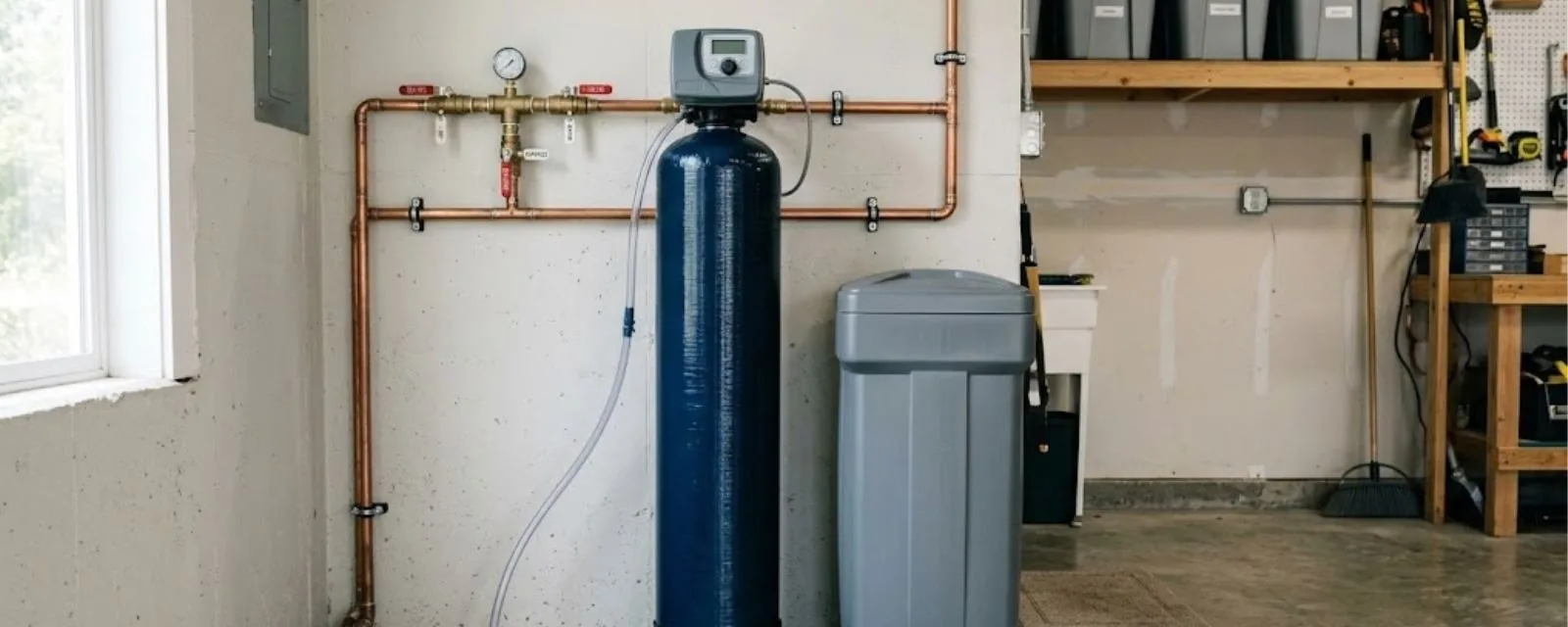
A water softener removes calcium and magnesium, the minerals that make water hard, and swaps them for sodium or potassium. Filtration is separate. It removes chlorine taste, sediment or other substances. Most homes here need softening first, and add filtration if taste or odor is the concern.
What your utility publishes
| Source | Average | Range | Notes |
|---|---|---|---|
| Yorba Linda Water District groundwater, 2024 data | About 20 grains per gallon (347 mg/L) | 16 to 25 grains (266 to 430 mg/L) | About 85 percent of YLWD supply |
| Metropolitan Water District imported water, 2024 data | About 16 grains per gallon (270 mg/L) | 14 to 18 grains (235 to 305 mg/L) | About 15 percent of YLWD supply |
| Golden State Water Placentia-Yorba Linda system, 2025 data | About 11 grains per gallon (188 mg/L) | 3.9 to 17.5 grains (67 to 299 mg/L) | Combined system average |
By the USGS scale, water above 180 milligrams per liter is classed as very hard. All three averages above are close to or over that line. The figures vary by where you live, because YLWD and Golden State Water serve different parts of the area, and by season, because the mix of groundwater and imported water changes.
Who supplies your home?
Most Yorba Linda homes are served by Yorba Linda Water District, though Golden State Water Company serves some areas. In the Locke Ranch area, for example, Golden State Water provides drinking water and the district provides sewer service. Many Placentia customers are served by Golden State Water as well. Your bill names your supplier, and its annual water quality report gives the current hardness.
That matters for sizing. A softener sized for water at 11 grains runs differently from one sized for 20, because it regenerates more often. We size to your supplier's report and your household, and we recommend testing your own tap before sizing.
Wondering what your home needs?
Call with your supplier and household size. We will explain a sensible setup before quoting.
Signs of hard water in a home
White crust on faucets and showerheads
Calcium and magnesium dry into scale that clogs aerators and spray holes.
Spots on glasses and dishes
Dishwasher cycles leave film and spots, even with rinse aid.
Heaters that rumble or lose capacity
Scale builds on tank floors and on tankless heat exchangers.
Soap that will not lather
Soap reacts with the minerals and leaves a sticky scum on tubs and tile.
How we install a softener
- Confirm hardness from the utility report and, if you wish, a tap test.
- Size the unit to the household and hardness.
- Install it on the main line after the shutoff and before the water heater, with a bypass valve.
- Connect the drain for regeneration and the overflow for the brine tank.
- Program the valve, test water at several fixtures and show you how to add salt.
Installing a softener at the main means every fixture in the house gets soft water, and the water heater is protected. Keep an outdoor hose bib on a bypass if you do not want soft water on the lawn. Our water heater installation page explains how the softener ties into a new heater.
Permits and rules
Yorba Linda's plumbing chapter, Municipal Code 15.24, lists water softeners among certain items exempted from permits when the work is not tied to other construction. Ask the Building Division at 714-961-7120 if your project involves new plumbing runs. A softener must also drain to an approved point, which we plan for in the installation.
What a softener or filter costs
Frequently asked questions
Yorba Linda Water District's 2024 report lists its groundwater at an average of 20 grains per gallon, and its imported water at about 16. Golden State Water's Placentia-Yorba Linda system reported an average of about 11 for 2025. Check the current report for your supplier.
Softened water has a small amount of sodium or potassium added, but most people do not notice it. If taste is a concern, ask about potassium or an under-sink drinking filter.
The city's plumbing chapter lists water softeners among certain permit exemptions when not tied to other construction work. Confirm with the Building Division at 714-961-7120.
Yes. Softened water leaves little scale on tank floors and heat exchangers, which keeps flushes quick and units efficient.
Only if you have a taste, odor or sediment concern. A softener does not filter chlorine or sediment, so those are handled with a separate filter.
Yes. The utility report gives an average, but a tap test shows what reaches your fixtures after your own plumbing.
Hard water speeds up wear on a heater, so read about water heater repair if yours is already rumbling.
If you are replacing the heater anyway, water heater replacement is the right moment to add a softener.
For code questions, water softener & filtration work in Yorba Linda follows the California Plumbing Code, which incorporates the Uniform Plumbing Code (UPC), and the city adopts it in Municipal Code 15.24.