
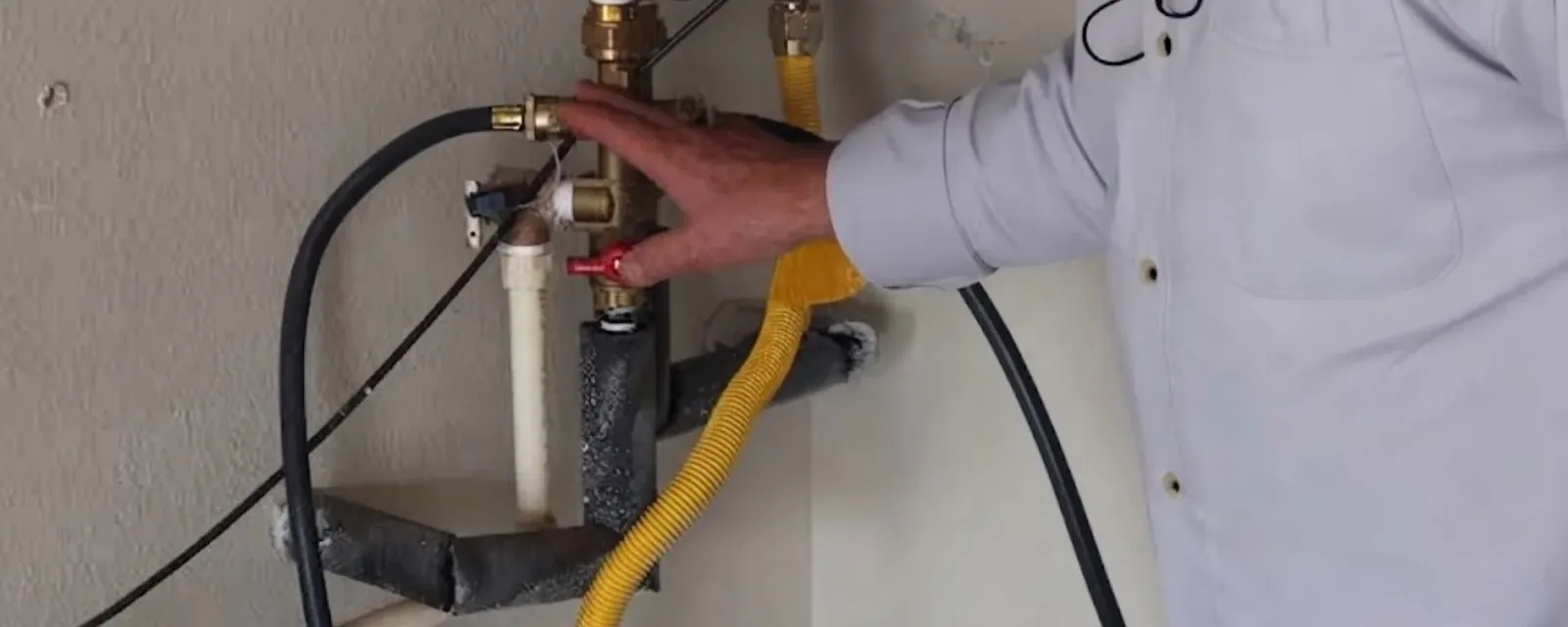
A recirculating pump moves hot water through your pipes so it is ready at the tap. It shortens the wait and saves the water that would have gone down the drain. It also adds a part that needs power, and it can raise your energy use. This guide explains how it works and when it makes sense.
If a faucet far from the heater takes a long time to deliver hot water, you are waiting for cold water in the line to flush out. A pump keeps warm water moving so that wait is much shorter.
How a recirculating system works
A pump installed at or near the water heater pushes hot water through the pipes and returns it to the heater. Some systems use a dedicated return line. Others use the cold line as the return and a small valve under the farthest sink.
Controls vary. A timer runs the pump at set times. A temperature sensor runs it when the water cools. A button or a motion sensor runs it on demand. On-demand and timed controls use less energy than a pump that runs all day.
| Type | How it works | Trade-off |
|---|---|---|
| Dedicated return line | A separate pipe brings water back to the heater | Best performance, harder to retrofit |
| Retrofit with a crossover valve | Uses the cold line as the return | Easy to install, cold line warms a bit |
| Timer control | Runs at set hours | Simple, can waste energy |
| On-demand control | Runs when you press a button or a sensor trips | Efficient, needs a sensor or button |
Is it worth it
The benefit depends on the distance between the heater and the farthest fixture. A small home with a heater close to every tap gains little. A larger home with a long run or a heater far from the master bath gains more. The wait time and the water you waste while waiting are the real measures.
Pumps run on electricity and can lose heat from the pipes, so uninsulated lines make the system less efficient. Insulating the hot water pipes is worth doing with any recirculation system. It also keeps the water hotter when it reaches the tap.
Tankless heaters and recirculation
Many tankless units have recirculation built in or support an add-on pump. The manufacturer's manual says which pump and controls are approved. Using the wrong pump can void the warranty or cause the heater to short cycle, so check before buying.
If you are planning a new heater, ask about recirculation at the same time. It is simpler to plan it into a tankless installation than to add it later.
What installation involves
- Choose the pump location near the water heater, with access to power.
- Install the pump with isolation valves so it can be serviced.
- Add the crossover valve at the farthest fixture or connect the dedicated return line.
- Set the control, such as a timer or on-demand sensor.
- Check for leaks, purge air and confirm the water reaches the farthest tap quickly.
Noise, wear and what to expect
A pump should run quietly. A loud pump may have air trapped inside, a failing bearing or a flow that is too high. Air is the most common cause after a new installation, and a plumber can bleed it out.
Pumps wear over time. Expect to service or replace one eventually, and ask which parts are available. A pump on a timer runs fewer hours than one that is always on, so it lasts longer.
Check the temperature at the farthest tap after the installation. If the water is still slow to warm, the return line may be blocked or the valve may be set wrong. A short follow-up visit fixes that.
When not to install a pump
If the heater sits close to every fixture, the gain is small. If the pipes run through an unconditioned space and are not insulated, the pump will lose a lot of heat. In those homes, fix the insulation first.
A homeowner on a tight budget may also be better off with a shorter run or a point of use heater at the far bathroom. Ask a plumber to compare the options.
Yorba Linda: water supply context
Yorba Linda Water District serves more than 74,000 residents and businesses through about 355 miles of water mains and 14 reservoirs. The district's 2024 data shows groundwater hardness averaging 20 grains per gallon. Hard water leaves scale inside a pump and its fittings, so choose a pump rated for your water and plan to service it.
Municipal Code 15.24 adopts the 2025 California Plumbing Code. A new recirculation line and electrical connection are more than a like-for-like swap, so ask the Building Division at 714-961-7120 whether your project needs a permit.
Sources: Yorba Linda Water District, City of Yorba Linda Municipal Code 15.24.
Saving water and energy
Ways to get the most from a pump
- Insulate the hot water pipes, especially long runs.
- Use a timer or on-demand control instead of a pump that runs all day.
- Set the water heater temperature no higher than needed.
- Service the pump and check the valves once a year.
- Fix dripping hot taps, since they undermine the system.
If you still wait for hot water after the pump is installed, the problem may be a failing heater or a restricted pipe. Water heater repair can check the heater, and old galvanized lines may point toward repiping.
Neighbors in Placentia ask us about this often. Our Placentia page explains how we serve that side of town.
Frequently asked questions
It can. Instead of running cold water down the drain while you wait, the pump keeps hot water close to the tap. The savings depend on the distance to the fixture.
It uses electricity and can lose heat from the pipes. A timer or on-demand control and insulated pipes keep the cost down.
Yes. A retrofit kit with a crossover valve under the farthest sink works without a new return line.
Scale can build inside pumps and valves. Yorba Linda Water District's 2024 data shows groundwater hardness averaging about 20 grains per gallon, so plan for periodic service.
Many can. Check the manufacturer's manual for approved pumps and settings before buying.
If hot water is slow because of the heater, water heater repair checks the unit.
For old supply lines that cause low flow, repiping replaces them.
For code questions, plumbing work in Yorba Linda follows the California Plumbing Code, which incorporates the Uniform Plumbing Code (UPC), and the city adopts it in Municipal Code 15.24.
Our home base and main service area is Yorba Linda, described on the Yorba Linda Pro Plumbing home page.